

 Blog
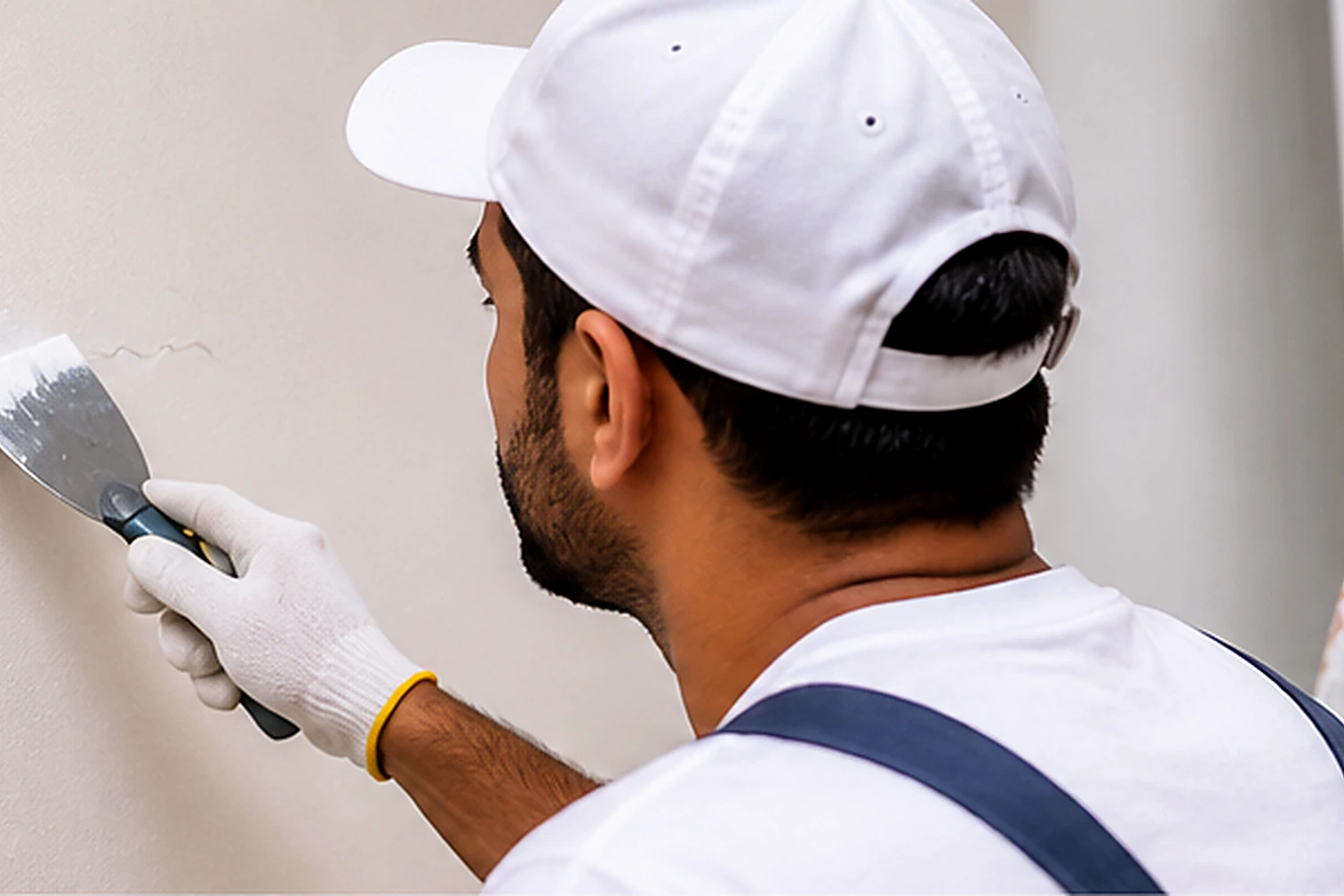
Most hairline wall cracks, under about 1 mm wide, are cosmetic. To fix one before painting, widen it slightly, clean out the dust, press in a flexible wall crack filler, let it dry fully, sand it flush, prime the patch, and repaint. Cracks that are wider, still growing, or paired with sticking doors or damp stains need a professional assessment first, because paint will not hold them shut.
Have cracked walls to fix and repaint? Send photos on WhatsApp, call +971 50 502 1026, or request a free quote.
Why Do Walls Crack in Dubai?
Wall cracks usually come from movement or moisture. These are the most common causes in Dubai homes:
- Air conditioning and heat cycles. Interiors stay cool while exterior walls bake in the sun, so materials expand and contract again and again. Gypsum walls are especially prone to hairline cracks.
- Joints between different materials. Cracks often appear where gypsum board meets plaster, along ceiling lines and around door and window frames.
- New-build shrinkage. Plaster and screed can shrink as they dry, so fine cracks may appear in the first year or two.
- Moisture. Leaks, condensation and damp can loosen plaster and open cracks, often with stains or flaking paint nearby.
- Building movement. Settlement or structural movement causes the wider cracks that need an engineer.
- Poor preparation. Paint applied over old cracks that were never filled properly will show them again.
Types of Wall Cracks: Hairline, Minor, and Structural
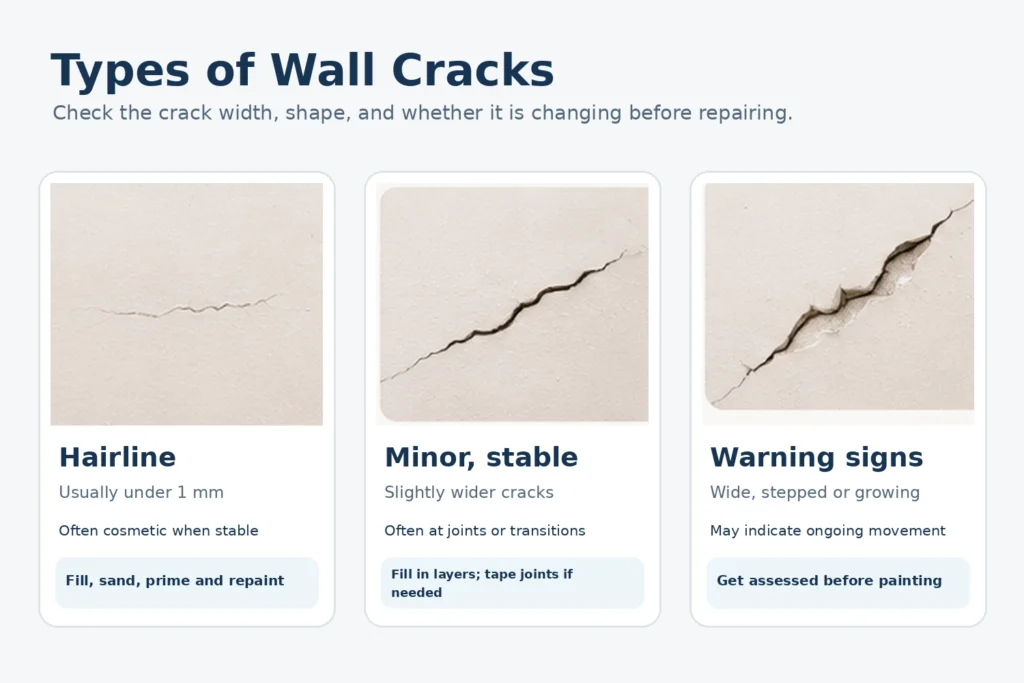
A crack’s width and behaviour tell you how to treat it. These sizes are a rule of thumb, not a diagnosis.
| Type | What It Looks Like | Common Cause | What to Do |
|---|---|---|---|
| Hairline | Very fine, usually under 1 mm | Drying shrinkage, heat cycles | Fill with flexible filler, sand, prime and paint |
| Minor | A little wider, but stable | Joints, small movement | Fill in layers, reinforce with mesh tape if needed |
| Structural or Active | Wide, deep, stepped, or growing | Settlement or building movement | Get a professional assessment before painting |
How to Tell If a Crack Is Structural
Call a professional before you repaint if you notice any of these:
- The crack is wider than about 6 mm, roughly a quarter inch
- It keeps growing, or reopens after you repair it
- Doors or windows have started sticking
- The wall is bulging, or the floor is uneven
- The crack is stepped or runs diagonally
- There are damp stains or new moisture around it
- Cracks are spreading across several rooms
Painting over a moving crack only hides it for a short time. The cause needs fixing first.
Best Wall Crack Filler for Each Type of Crack
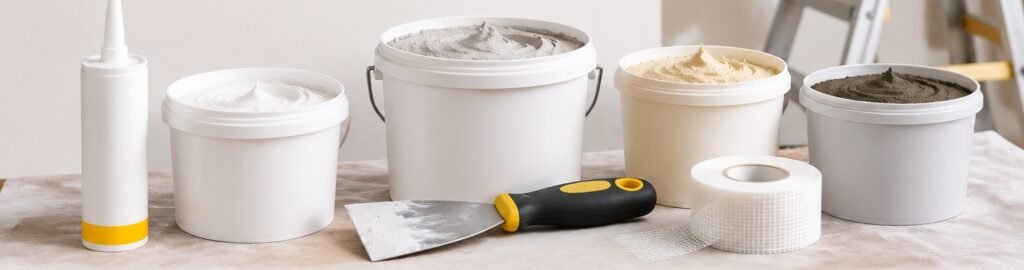
The right filler depends on the crack and the surface. Paint on its own and standard caulk lack the flexibility to cope with wall movement, so choose a product made for the job.
| Filler | Best For | Notes |
|---|---|---|
| Flexible acrylic filler or caulk | Hairline cracks and movement-prone cracks, such as joints at ceilings and trim | Stays flexible and can be painted over |
| Ready-mixed lightweight filler | Small, stable hairline cracks on interior walls | Easy to apply and sands smoothly |
| Gypsum or plaster-based filler, or joint compound | Wider interior cracks and drywall joints | Often used with mesh tape for reinforcement |
| Stucco filler | Smoothing uneven plaster before painting | Applied in coats before the topcoat |
| Cement-based patching compound | Static cracks in exterior masonry | Not for moving cracks |
| Exterior-grade flexible sealant | Joints and fine cracks outside | Made for sun and weather |
Filler is only part of the fix. Some emulsions help too: Jotun lists a crack tolerance of up to 1 mm for Fenomastic Hygiene, and a flexible wall texture paint in Dubai can hide very fine, stable cracking. Neither replaces filling a visible crack properly.
How to Fix Hairline Cracks Before Painting
Follow these steps for stable hairline cracks on interior walls:
- Clean the area. Scrape off loose paint and flaking plaster around the crack.
- Open the crack slightly. Run a utility knife or putty knife along it to remove loose material and give the filler something to grip.
- Remove the dust. Brush or vacuum the crack clean.
- Fill it. Press flexible filler deep into the crack, not just over the top.
- Smooth it. Wipe with a damp knife or sponge so the filler sits flush.
- Let it dry fully. Drying time depends on the product and the depth, so follow the label.
- Sand it flush. Use fine sandpaper until the patch cannot be felt.
- Prime the patch. Primer stops the repair from showing through the topcoat as a dull spot.
- Paint. Apply two coats over the wall so the colour and sheen match.
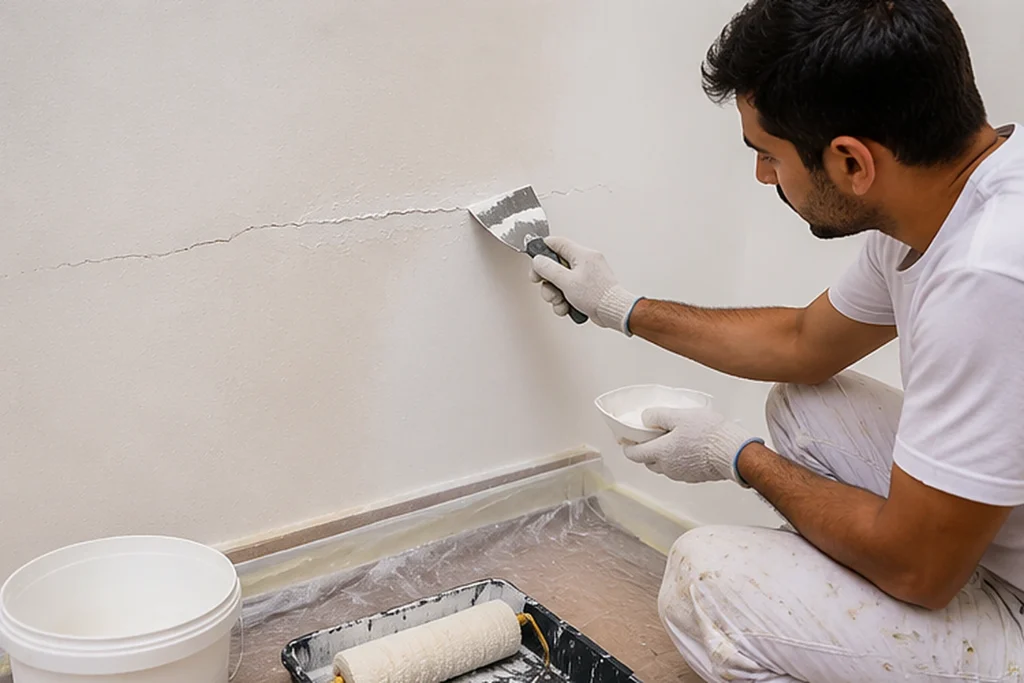
This kind of careful surface preparation is what keeps a repaint looking smooth for years.
How to Repair Wider Cracks
A minor crack wider than a hairline needs a little more work:
- Open and clean the crack as above.
- Fill it in thin layers, letting each layer dry before adding the next.
- Bed mesh tape or joint tape into the filler for reinforcement where the crack sits along a joint.
- Skim, sand, and prime.
If the crack returns within weeks, stop repairing and get it checked, because it is probably moving.
Common Mistakes When Filling Wall Cracks
- Painting straight over the crack. Paint alone does not close or hold a crack.
- Skipping the loose-material clean-out. Filler will not bond to crumbling plaster.
- Using a rigid filler on a moving crack. It cracks again as the wall moves.
- Leaving the patch unprimed. Bare filler absorbs paint differently, so the repair shows as a dull patch.
- Ignoring damp. If moisture is the cause, fix the leak first. Persistent damp can also lead to mold on walls in Dubai.
- Choosing a high-gloss finish. Sheen highlights every repair. A matt or low-sheen paint finish hides small flaws better.
Why Do Cracks Come Back After Repair?
Cracks reopen when the wall is still moving, when the filler was too rigid, or when the crack was only skimmed over instead of filled. Heat cycles in Dubai can reopen repairs made with the wrong product, and a crack along a joint between two materials will move again unless it is reinforced. If the same crack returns more than once, treat it as an active crack and have it assessed.
Cracks on Exterior Walls
Outside cracks face sun, heat, dust, and sometimes humidity, so the repair needs exterior-grade materials. Fine cracks can be filled with a flexible exterior filler or sealant and finished with a flexible coating. Wider or spreading cracks on a villa facade should be checked by a professional before repainting. The right coating matters too: weatherproof exterior wall paint is made to handle UV and heat, which interior paint is not.
DIY or Hire a Professional?
DIY works for a few stable hairline cracks in one room. Hire a professional when:
- Cracks appear in several rooms
- Repairs keep reopening
- You are planning a full repaint and want a smooth, even finish
- The cracks are on high walls, ceilings, or a villa exterior
- You are not sure whether a crack is structural
Crack repair is part of proper wall preparation for interior painting, and it matters most before a move-out repaint, where visible cracks and patches can be noticed at handover.
How Much Does Crack Repair Cost in Dubai?
Crack repair is usually priced as part of the repaint, because the amount of work depends on how many cracks there are and how wide they are. Service Hub painting starts from AED 399 for a feature wall and AED 799 for a room (excluding VAT), with the final price confirmed in writing after we see the walls. For typical figures, compare the usual painting cost in Dubai for your type of property.
Get Cracked Walls Fixed and Repainted
Service Hub has 12+ years of painting experience in Dubai, 400+ completed projects, and 50+ skilled painters. Our wall painting services in Dubai include repairing cracks and preparing the surface before painting. We also work on apartment painting and villa painting projects, with a free site visit, a written quote, and a 30-day workmanship warranty.
Send photos of the cracks on WhatsApp, call +971 50 502 1026, or get a free quote.
Frequently Asked Questions
- What Is the Best Filler for Hairline Cracks in Walls?
A flexible, paintable filler is best for hairline cracks because it can move slightly with the wall. Ready-mixed lightweight filler also works for small, stable cracks on interior walls. - Can I Paint Over Wall Cracks Without Filling Them?
Not reliably. Paint does not close or hold a crack, so it will usually still show, and it may reopen. Fill, sand, and prime the crack first. - Why Do Walls Crack in Dubai?
Common causes include heat and air conditioning cycles, joints between different materials, shrinkage in new buildings, moisture, and building movement. - How Wide Is Too Wide for a DIY Crack Repair?
As a rule of thumb, cracks wider than about 6 mm, or cracks that keep growing, should be assessed by a professional before you repair and repaint. - How Long Should Filler Dry Before Painting?
It depends on the product and how deep the fill is. Follow the instructions on the label, and make sure the filler is fully dry before sanding and priming. - Do I Need to Prime Over Filler?
Yes. Bare filler absorbs paint differently from the wall around it, so priming the patch helps the repair blend in. - Will Cracks Come Back After I Repair Them?
Stable hairline cracks usually stay repaired when the right flexible filler is used. If a crack keeps coming back, the wall is probably still moving and needs a professional assessment. - Do Painters Repair Cracks Before Painting?
Yes. Repairing cracks and patching is a normal part of wall preparation before a repaint. Service Hub includes it as part of preparing your walls. - Is a Crack in My Villa Wall Structural?
Not necessarily, but wide, growing, or stepped cracks, or cracks with sticking doors or damp stains, should be checked by a structural engineer or experienced contractor.
